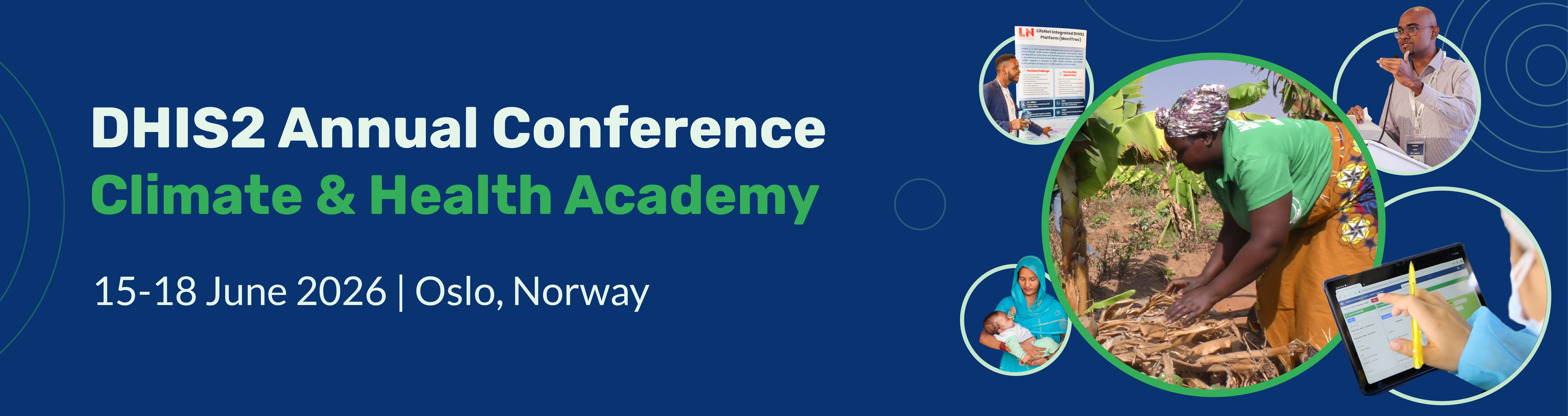
Get ready for four days of learning and inspiration as you experience the world-changing impact of the global DHIS2 Community! |
The DHIS2 Annual Conference brings together DHIS2 implementers, developers, government representatives, donors, technical partners, and other DHIS2 experts and stakeholders from around the world to share experiences, learn about the latest developments and innovations, and make connections that can lead to new partnerships and collaborations.
The DHIS2 Climate & Health Academy will provide technical training on innovative DHIS2 tools for climate data integration and predictive modeling, and share learnings from real-world use cases to help catalyze the use of DHIS2 systems and data to strengthen climate-resilient health systems.
These two events will run in parallel, allowing conference participants the opportunity to engage in informational sessions and discussions on climate and health, while also giving Academy participants opportunities for more focused learning and hands-on workshops.
Learn more about the agenda for each event: DHIS2 Annual Conference | DHIS2 Climate & Health Academy
Planning to attend the Annual Conference in Oslo? All in-person registration options include access to sessions, conference materials, plus lunch and coffee breaks for four days. The fees are the same for the Annual Conference and Climate & Health Academy—and Academy registration includes access to all Annual Conference events—so you only need to register once for the event that best matches your interests. Learn more
• Standard Registration: $850 USD per person. This rate will remain available for all attendees until registration closes.
• Early-Bird Registration: $700 USD per person. This rate is available for attendees who register and pay by 15 April, while tickets last.
• LMIC Registration: $700 USD per person. This rate is for attendees from low- and middle-income countries, and will remain available until registration closes.
Explore all in-person ticket options on the Registration page.
For online participation click here.
2026 Annual Conference - Standard Registration
The standard fee for all conference attendees.
2026 Annual Conference - LMIC Registration
For attendees from low and middle-income countries.
2026 Climate and Health Academy + DAC - Standard Registration
The standard fee for all conference attendees.






Join the DHIS2 mailing list to get conference details and DHIS2 updates as soon as they are available!
Here you can find some additional information and resources about this event.